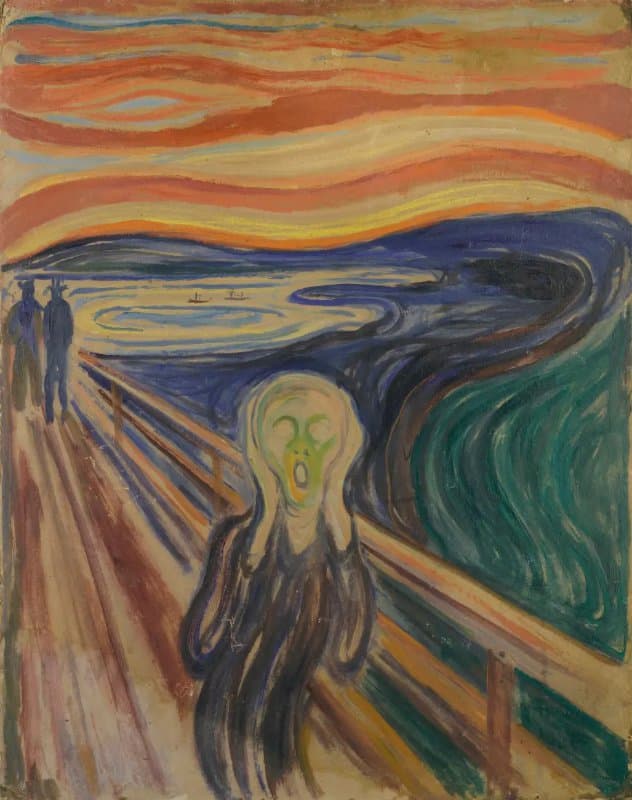
The Scream (1910)
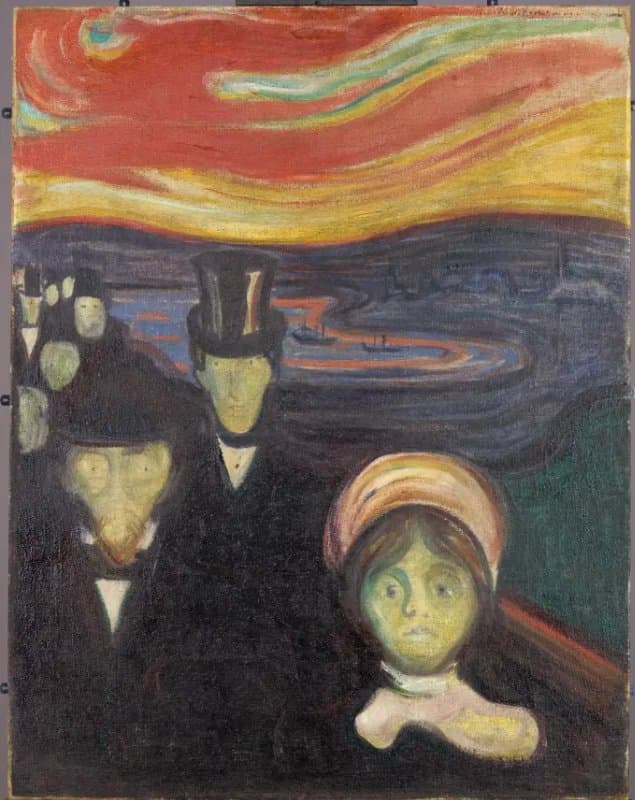
Anxiety (1894)
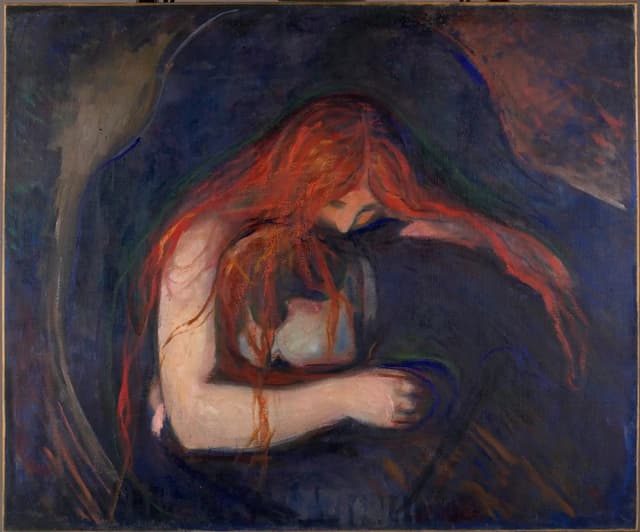
Vampire (1895)
The Munch Museum in Oslo holds more than 42,000 works by Edvard Munch, which makes it one of the largest single-artist museums in the world. Every one of those works needs words: what it shows, how it was made, what it shares with the rest of the collection.
Writing that by hand is slow, careful work. The museum's curators needed subjects, themes, techniques and the connections between works for the whole collection, and at the pace of one person describing one work at a time, it would take decades.
Machines draft, curators decide
Together with the museum, we built Collective AI. It was never meant to replace the curators' judgement; it was meant to give them a first draft worth editing, so their time goes into the parts only an expert can do.
It works in three steps. First, several vision models look at each artwork and pull out what they can see: colours, composition, subjects and objects, technique, mood, and the visual patterns that link one work to another. Then NorskGPT, our Norwegian language model, turns that into descriptions in Norwegian, using the vocabulary of art history rather than the flat phrasing of a general model.
Last, and most important, a curator reads every description, edits it and approves it. Nothing enters the collection database without that approval, and each correction feeds back into the system, so the next draft is a little better than the last.
All of it runs on European infrastructure. The museum's data and images never leave EU jurisdiction.
See it in action
Watch how the Munch Museum uses AI in its work with the collection.
Video: Oslo Municipality, Department of Culture and Business
Telling the story together
The museum and Bineric have presented the work side by side. At JavaZone 2024 in Oslo, Bjørn Erik Lie, the museum's Chief Digital Officer, and Hira Mehmood, co-founder of Bineric, showed how AI and human expertise combine to understand a cultural collection. At Oslo Innovation Week 2025, we joined the Munch Museum and TCS for “Unlocking Cultural Data with AI: Image + Text Models”, on how GPT, CLIP and embedding models draw knowledge out of cultural collections.
What we took from the project is simple: AI is most useful in a museum when it does the first pass and the experts keep the last word.
Build your own AI solution.
In cultural heritage, research or enterprise, we build AI that respects human expertise and data privacy.